
Buyer's Guides › Jet
How to Buy a Cessna CitationJet, CJ1-CJ4 and M2: Buyer's Guide
The owner-flown, single-pilot light jet family with a deep used market, from 1990s CitationJets to new-generation CJ4s.
Updated October 2026 · Market data from 57 live fyiAero listings, the FAA registry and NTSB records
Overview
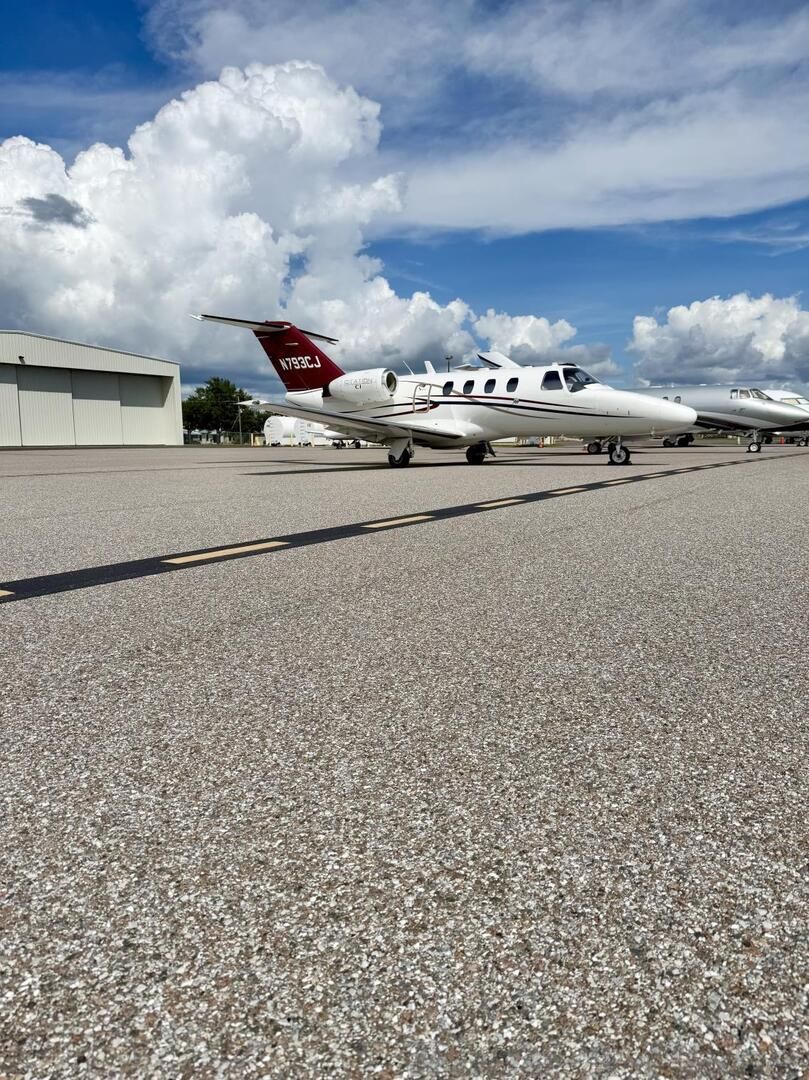
The Cessna 525 family started with the original CitationJet in the early 1990s. It grew into the CJ1, CJ2, CJ3 and CJ4, plus the M2 entry model. Every member is certified for single-pilot operation, runs on Williams FJ44 turbofans and uses straightforward systems that owner-pilots can manage. That combination made it the default step-up jet for pilots coming out of turboprops and high-performance pistons, and it is why the used market is so deep.
fyiAero listings currently show 57 aircraft for sale across the family, out of 1,953 on the FAA registry. Asking prices run from $1,190,000 to $11,895,000, with a median of $3,985,000. Listed model years span 1993 to 2024, and median airframe time is 3,279 hours. That spread is wide because these are really several different airplanes sharing a type certificate lineage. A 1990s CitationJet and a late-model CJ4 differ in cabin size, range, avionics and operating cost.
Buy this family for the support network, the single-pilot ergonomics and resale liquidity. Do your homework on engine program status, avionics generation and maintenance history, because those three things move the price more than paint and leather.
Who it's for. The 525 series fits an owner-pilot or small company flying one to five passengers on trips of a few hundred to roughly a thousand miles, with the bigger CJ3 and CJ4 stretching that further. Early CitationJets and CJ1s suit regional business trips into shorter runways. CJ2s and CJ3s add cabin and range for families and small teams. CJ4s approach midsize capability. Every model requires a type rating, and insurers expect formal initial and recurrent training at an approved provider. Pilots without prior turbine or jet time should expect underwriters to require a mentor pilot or supervised operating period, higher premiums or both. The jump from a piston or turboprop is manageable in this family, but the paperwork and training commitment are real, and you should get an insurance quote before you make an offer.
Generations and variants
| Version | Years | What changed |
|---|---|---|
| CitationJet (Model 525) | 1993-2000 | This is the original straight-wing, single-pilot jet, with FJ44-1A engines and early-generation avionics. These aircraft anchor the bottom of the market, with 1990s examples on fyiAero listing roughly $1.2 million to $1.6 million, and avionics condition and engine program status drive most of the price spread. |
| CJ1 and CJ1+ | 2000-2011 | The CJ1 brought a modernized panel built around Collins Pro Line 21. The CJ1+ added FADEC-controlled engines and other refinements that buyers pay up for. Both share the original airframe size, so the premium over a CitationJet is mostly avionics, engines and age. |
| M2 and M2 Gen2 | 2013-present | The M2 is a modernized CJ1-size jet with Garmin G3000 touchscreen avionics and slightly better performance, aimed at pilots stepping up from turboprops. The Gen2 refreshed the interior and avionics features, and late examples hold value well because they compete with new aircraft. |
| CJ2 and CJ2+ | 2000-2016 | The CJ2 stretched the fuselage, enlarged the wing and moved to more powerful FJ44-2 engines for more cabin, speed and range. The CJ2+ added FADEC, upgraded engines and Pro Line 21 refinements, and it commands a noticeable premium over the early CJ2. |
| CJ3 and CJ3+ | 2004-present | The CJ3 is a longer cabin with FJ44-3 engines and real coast-to-coast-with-a-stop capability, which made it one of the most popular owner-flown jets. The CJ3+ switched to Garmin G3000 avionics with synthetic vision and autothrottle-ready architecture on later builds, and it prices well above legacy Pro Line 21 CJ3s. |
| CJ4 and CJ4 Gen2 | 2010-present | The CJ4 has a swept wing, FJ44-4 engines and a larger cabin, making it the fastest and longest-legged of the family. The Gen2 updated the interior and features, and it sits at the top of the market, where the highest fyiAero asking prices are found. |
What a Cessna CitationJet, CJ1-CJ4 and M2 costs to buy
23 priced listings on fyiAero right now ask between $1,190,000 and $11,895,000, with a median of $3,985,000 and a median of 3,279 hours total time. Against fyiEstimate, 11 are priced below estimate, 1 within range and 7 above.
- Know which model you are pricing. Year averages on fyiAero listings jump from about $1.2 million to $1.6 million for 1990s aircraft, to about $2.0 million to $2.25 million for 2000-2001, to $3.2 million to $5.25 million for 2003-2008, and to an average of $8.51 million for four 2023 listings. Much of that jump reflects the move from CitationJet and CJ1 to CJ3 and CJ4 airframes, not age alone.
- Airframe time matters, but it is tangled up with model and age. Listings under 1,000 hours show a median of $6,300,000, versus $2,000,000 for 3,000-5,000 hours and $1,624,500 for 5,000-plus hours. Compare like models with like times, and remember that sample sizes are small.
- Engine program enrollment, such as Williams TAP coverage, is often the single biggest value lever after model and avionics. An aircraft not on a program should be priced against the cost of upcoming overhauls or buy-in, not just its asking price.
- Avionics generation splits the market. WAAS/LPV capability, ADS-B Out, a current FMS and, on older aircraft, a glass retrofit all add real value. An unsupported legacy panel is a negotiating point.
- With 57 aircraft listed against a fleet of 1,953, inventory is reasonable but not deep within any single model. Be ready to travel for the right airplane and to move quickly on clean, program-enrolled examples.
- Hours alone do not tell the story. Ask for cycle counts, utilization history and whether the aircraft flew Part 135 or under a fractional, management or training operation, since those histories change wear patterns and buyer appetite.
Average asking price by model year
Median asking price by airframe time
| 0–1,000 hrs | $6,300,000 | 7 listings |
| 1,000–2,000 hrs | $4,122,500 | 2 listings |
| 2,000–3,000 hrs | $6,247,500 | 2 listings |
| 3,000–5,000 hrs | $2,000,000 | 7 listings |
| 5,000+ hrs | $1,624,500 | 4 listings |
Pre-buy inspection checklist
Have a shop that knows the type do the pre-buy, and ask them to research every applicable AD and service bulletin. Pay particular attention to:
- Engine program status and engine records. Confirm enrollment level, transferability, any buy-in owed, hours and cycles since overhaul and hot section, trend monitoring data and any inspections or repairs. Uncovered engines can carry overhaul liability well into six figures each.
- Complete logbooks and inspection program compliance. Verify the aircraft is current on the manufacturer's inspection program, including phase and calendar items. Have the shop research all applicable ADs and service bulletins for that specific model and engine version.
- Damage history and structural repairs. Runway excursions, gear-up landings and hangar rash on composite and aluminum structure all hurt value. Look for undocumented repairs, especially on wing leading edges, flaps and the lower fuselage.
- Corrosion inspection. Check wheel wells, the belly, wing attach areas, the battery box and areas under lavatory and galley fittings, particularly on coastal or humid-climate aircraft.
- Ice protection systems. Inspect pneumatic boots for cracks and patches on models that use them. Test the bleed-air and electrically heated systems, windshield heat and engine anti-ice, since repairs are expensive and system health matters for winter dispatch.
- Windshield and side windows. Look for delamination, crazing, scratches and heat element faults. Windshield replacement is costly and can ground the aircraft while you wait for parts.
- Landing gear, brakes and anti-skid. Check trailing-link gear for wear, leaks and corrosion. Confirm brake wear, anti-skid function and tire condition, since this family often operates from shorter runways where brakes earn their keep.
- Pressurization and environmental system. Run a pressurization check and inspect outflow valves, door seals and air cycle or vapor cycle components. Leaks and air conditioning faults are common squawks that buyers underestimate.
- Avionics function, databases and compliance. Test autopilot, FMS, displays, radar and transponders. Confirm ADS-B Out compliance, RVSM status and documentation, and subscription and database costs. On older panels, check parts support.
- Batteries and electrical system. Verify battery type, age and capacity checks, starter-generator condition and any battery-related AD compliance. On later models, have the shop confirm the status of manufacturer actions on lithium-ion battery installations.
Popular upgrades
- Garmin glass cockpit retrofit (CitationJet and CJ1). Modern Garmin retrofits replace aging displays, add WAAS/LPV and synthetic vision and solve parts-support worries. A recent, well-documented retrofit adds meaningful resale value and broadens the buyer pool.
- Pro Line 21 upgrades (WAAS/LPV, FMS, ADS-B, charts). On CJ1, CJ2+, CJ3 and CJ4 aircraft with Pro Line 21, updated FMS and WAAS/LPV packages keep the panel current. Aircraft lacking these upgrades sell at a discount.
- Tamarack active winglets. Available for several 525 models, they improve climb and fuel efficiency. Market reaction is mixed, so look for documented maintenance on the system and treat the winglets as a modest plus rather than a big premium.
- Engine program enrollment. Strictly a financial upgrade rather than a modification, but enrolling or upgrading coverage before sale often returns more value than it costs and makes the aircraft far easier to sell.
- Interior refurbishment and cabin connectivity. Fresh leather, cabinetry and cabin Wi-Fi help an aircraft sell faster. Buyers rarely pay back the full cost, though, so value these below engines and avionics.
Ownership costs
Jet ownership is a fixed-cost business as much as a fuel bill. fyiAero's operating estimate for a representative 525-series jet assumes 330 knots cruise, 1,100 nm range, five passengers and a fuel burn of 127 gallons per hour. It puts variable cost at $2,202 per hour, or about $5.98 per nautical mile. Fixed costs on the low end run about $359,132 a year for items like insurance, hangar, training, subscriptions, inspections and crew or management if used. At 325 hours a year, the estimated total budget is $1,074,912, based on an average pre-owned value around $1,536,245. Larger CJ3 and CJ4 models burn more and cost more to insure and maintain, while engine program rates and whether you hire a pilot or fly yourself will swing your numbers substantially. Build a budget from real quotes before you commit.
Safety record
NTSB records show 15 accidents in this family over the last 10 years, six of them fatal and six with the aircraft destroyed. Against 1,953 registered aircraft, that works out to 7.7 accidents and 3.1 fatal accidents per 1,000 aircraft over the decade. That is a solid record for an aircraft flown heavily by owner-pilots in single-pilot operations, but it is not a reason to relax. The recurring risk areas in light jets are single-pilot workload in busy airspace and IMC, loss of control during approach or after an upset, icing operations, and runway excursions on short or contaminated runways. Fly stable approaches with disciplined speed and configuration management. Rigorous initial and annual recurrent training with realistic single-pilot scenarios is the best safety investment you can make. Use the autopilot and FMS well, keep strict personal minimums for weather and runway length, and consider a mentor pilot early on. Those habits go further than anything you can buy for the airplane.
Alternatives to consider
- Embraer Phenom 100 / Phenom 300. Roomier cabins and modern Garmin avionics with strong performance, especially the 300. The Phenom 100 has a smaller used market than the CJ series, and the 300 costs more to buy and operate.
- HondaJet. Fast, efficient and modern with a distinctive over-wing engine design, but the fleet is smaller, the cabin is tight compared with a CJ3 and parts and service networks are thinner.
- Cirrus Vision Jet. Much lower acquisition and operating costs and a parachute system, but it is slower, shorter-legged and flies lower than any 525-series jet.
- Beechcraft Premier I. Fast with a wide cabin and often cheap to buy, but it costs more to maintain, has weaker support, worse field performance and a narrower resale market.
- Pilatus PC-24. Large cabin, cargo door and rough-field capability at the top of the light jet segment. Acquisition cost is far higher than most used CJs, and used inventory is limited.
Frequently asked questions
How much does a used Cessna CitationJet or CJ cost?
fyiAero listings currently range from $1,190,000 to $11,895,000, with a median asking price of $3,985,000. 1990s CitationJets are at the low end, while late-model CJ3+ and CJ4 aircraft set the top of the market.
Can the Citation CJ series be flown single-pilot?
Yes. Every model in the 525 family is certified for single-pilot operation, which is a big reason owner-pilots favor it. You still need a type rating, and insurers will require formal training and often supervised experience before you fly solo.
What is the difference between the CJ1, CJ2, CJ3 and CJ4?
Each step up brings a bigger cabin, more powerful engines, more speed and more range. The CJ1 shares the original CitationJet size, the CJ2 and CJ3 stretch the fuselage, and the CJ4 adds a swept wing and the longest legs of the family. Purchase price and operating costs rise accordingly.
What does it cost per hour to operate a CJ?
fyiAero's estimate for a representative 525-series jet is $2,202 per hour in variable costs, burning about 127 gallons per hour. Including fixed costs, the estimated annual budget is $1,074,912 at 325 hours per year, and larger models cost more.
Why do engine programs matter so much on a CJ?
Williams engine overhauls and unscheduled repairs are expensive, and engine programs spread that cost into an hourly rate. An aircraft enrolled in a transferable program typically sells faster and for more than one that is not, so check enrollment status before comparing prices.
How many Citation 525-series jets are in the U.S.?
The FAA registry shows 1,953 U.S.-registered aircraft in the family, and fyiAero currently lists 57 for sale. That depth means good parts support and a liquid resale market.
Cessna CitationJet, CJ1-CJ4 and M2 for sale
 📷 6
Prices, fleet and safety figures update automatically from fyiAero listings, the FAA aircraft registry and NTSB data. The editorial was written by fyiAero with AI assistance from that data and general type knowledge. It is not a substitute for a pre-buy inspection, title search or professional advice.
