
Buyer's Guides › Turboprop
How to Buy a Cessna 208 Caravan / Grand Caravan: Buyer's Guide
A rugged, fixed-gear, PT6-powered single-engine utility turboprop that hauls big loads from short, rough strips and holds its value.
Updated October 2026 · Market data from 18 live fyiAero listings, the FAA registry and NTSB records
Overview
The Cessna 208 Caravan is one of the most successful utility airplanes ever built. It pairs a big, boxy, high-wing cabin with a Pratt & Whitney Canada PT6A turboprop and fixed tricycle gear. The result is a simple, durable workhorse that cargo feeders, skydiving operators, bush and island charter companies, missionaries, and governments have flown hard for decades. Most Caravans live demanding commercial lives, and that history shapes the used market.
Supply is thin and prices are high. fyiAero listings currently show 18 aircraft for sale, with asking prices from $1,299,000 to $3,750,000 and a median of $2,090,000. Model years on the market run from 1989 to 2021. The median listed airframe has 13,589 hours, which is normal for this type. The FAA registry counts 864 U.S.-registered aircraft in the 208 family.
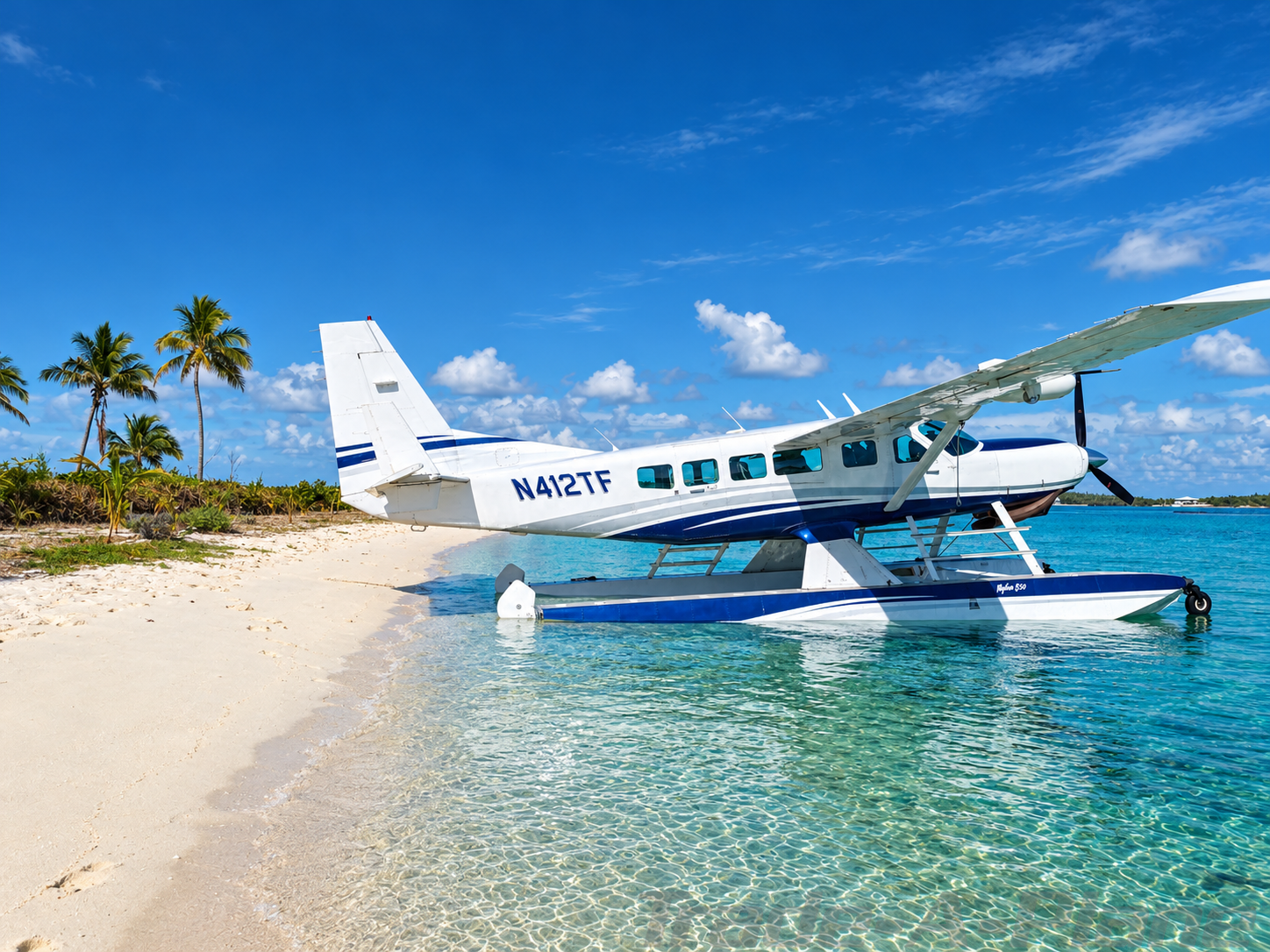
Most of what you will find is the stretched 208B Grand Caravan, including the higher-powered Grand Caravan EX. You will also see a few short-body 208s, amphibians on floats, and the occasional ex-cargo Super Cargomaster. With a Caravan, logbooks, engine condition, corrosion history and how the airplane was used matter far more than the model year.
Who it's for. The Caravan suits buyers who need to move a lot of people or freight into places a faster pressurized turboprop can't reach comfortably. Think gravel and grass strips, float operations, skydiving, remote lodges, or a family hauling everything to a backcountry property. It is unpressurized and cruises at modest speeds, so it is not a long-distance executive transport. Handling is honest and Cessna-like, but it is still a heavy turbine single. A private owner-pilot should plan on formal initial and recurrent training at a recognized turbine training provider. Insurers will look closely at total time, turbine time, and float or high-altitude experience. A low-time pilot moving up from a piston single should expect higher premiums, a required dual period, or an insurer that wants a mentor pilot aboard at first. For amphibians, add a seaplane rating and real water time before you approach the underwriter.
Generations and variants
| Version | Years | What changed |
|---|---|---|
| 208 Caravan (short body, analog era) | 1985-2007 | This is the original 208 with steam gauges and PT6A-114 power, later the 675-shp -114A. These are the least expensive entry point, and value depends heavily on engine time, avionics upgrades and corrosion history. |
| 208A / 208B Cargomaster and Super Cargomaster | 1985-1990s | These freight versions were developed largely for overnight express cargo flying. The 208B stretch added a longer fuselage and higher gross weight. Ex-cargo airframes often have very high hours and cycles and spartan interiors, so they usually trade below comparable passenger Grand Caravans. |
| 208B Grand Caravan (analog) | 1990-2007 | This is the stretched passenger and utility version that became the market standard, with more cabin and payload than the short body. Well-kept examples with fresh engines and modernized panels command a premium over original-panel airframes. |
| 208 Caravan and 208B Grand Caravan with Garmin G1000 | 2008-2012 | Cessna moved to the G1000 integrated flight deck, which greatly improved situational awareness and autopilot integration. These are often the sweet spot for private buyers who want a modern panel without new-airplane pricing. |
| 208B Grand Caravan EX | 2013-present | The EX uses the more powerful PT6A-140 for noticeably better takeoff, climb and hot-and-high performance, and later examples have G1000 NXi. EX models sit at the top of the market, and amphibious EXs are the most expensive Caravans you will find. |
What a Cessna 208 Caravan / Grand Caravan costs to buy
13 priced listings on fyiAero right now ask between $1,299,000 and $3,750,000, with a median of $2,090,000 and a median of 13,589 hours total time. Against fyiEstimate, 4 are priced below estimate, 0 within range and 4 above.
- Expect a wide spread. fyiAero asking prices run from $1,299,000 for a 1989 airframe to $3,750,000 for a 2021 example, with a median of $2,090,000.
- Year alone doesn't set price. In fyiAero listings a 2009 averaged $2,799,000 while two 2013s averaged $1,875,000, so configuration, engine time, floats and usage history clearly outweigh the model year.
- Airframe time matters. fyiAero listings with 1,000-2,000 airframe hours show a median ask of $2,325,000, versus $1,699,000 for airframes over 5,000 hours. With a median listed time of 13,589 hours, high time alone is not a dealbreaker on a well-maintained Caravan.
- Price the engine separately. A PT6 near overhaul or due for a hot section inspection can swing value by a large amount, so get engine trend data, recent borescope results and a clear picture of time and cycles since overhaul.
- Know the airplane's former job. Part 135 cargo, skydiving, float and island operations each leave different wear patterns, such as high cycles, saltwater corrosion or rough-field gear and belly damage. Read every logbook back to new.
- Inventory is thin, with 18 for sale on fyiAero right now. Be ready to move on a good airplane, but never skip a thorough turbine-experienced pre-buy to win a deal.
Average asking price by model year
Median asking price by airframe time
| 1,000–2,000 hrs | $2,325,000 | 2 listings |
| 5,000+ hrs | $1,699,000 | 5 listings |
Pre-buy inspection checklist
Have a shop that knows the type do the pre-buy, and ask them to research every applicable AD and service bulletin. Pay particular attention to:
- PT6A engine condition and trend data. Review engine trend monitoring, time and cycles since overhaul and hot section, and hot-start history. Have a borescope of the hot section done. Engine condition is the single biggest value variable.
- Propeller and governor. Check prop overhaul status, blade erosion, any prop strike history and governor and feathering operation. Caravans often run off gravel, which is hard on blades.
- Corrosion inspection of fuselage belly and lower structure. Caravans that operated near saltwater, on floats or in humid island environments can hide serious corrosion in the belly, under floorboards and around door frames.
- Wing attach fittings, struts and strut fittings. High-cycle utility flying and rough fields load these areas hard. Have the shop research applicable ADs and SBs and confirm compliance in the logs.
- Cargo pod and lower fuselage skins. Pods take rock strikes and ground handling damage, and moisture can trap corrosion behind them. Inspect attach points and the skin underneath.
- Landing gear, nose gear and steering. Look for hard-landing evidence, worn nose gear components and attach point cracking, especially on airplanes used on unimproved strips or for skydiving.
- Flap system tracks, rollers and actuator. The big Fowler flaps see heavy use on short-field and float operations. Worn rollers, tracks and actuators are common findings.
- Ice protection system and known-ice equipment. Verify the deice boots, heated components and any TKS system are complete and working. Confirm the airplane is properly equipped and documented for any icing approval you expect to rely on.
- Amphibious floats and float attachments (if equipped). Check float compartments for leaks and corrosion, gear actuation and hydraulics, attach fittings and the related fuselage structure. Float repairs are expensive.
- Logbook continuity and damage history. Commercial Caravans can have long, complicated histories. Missing logs, undocumented repairs or prior accident damage will hurt resale and insurability.
Popular upgrades
- Avionics modernization on analog airframes. Retrofit glass panels and modern digital autopilots make older Caravans much easier to sell and fly single-pilot. Expect a strong value bump, though rarely a dollar-for-dollar return.
- Engine power upgrades. STC'd conversions to more powerful PT6 variants improve takeoff, climb and payload, especially hot and high. A fresh upgraded engine is a major selling point.
- Amphibious floats. Amphibians are a niche but in-demand configuration and list at the top of the market. Floats cost speed and useful load and add maintenance and corrosion exposure.
- TKS or enhanced ice protection. Upgraded ice protection is valued by buyers in cold or wet climates, though no system makes the Caravan a heavy-icing airplane.
- Executive or utility interiors and air conditioning. A quality passenger interior and air conditioning raise appeal to private buyers. Bare cargo interiors appeal mainly to operators and can narrow the buyer pool.
- Cargo pod and utility mods. Belly pods, skydiving doors and other mission mods add utility for operators. Private buyers may see them as neutral or even a negative depending on mission.
Ownership costs
A Caravan is a turbine airplane, and it costs like one. fyiAero's operating cost estimate puts variable costs at about $559 per flight hour, mainly fuel, engine reserves and maintenance. A budget of about 91 hours a year totals roughly $107,507 annually once fixed costs like insurance, hangar, training and inspections are included. At a 175-knot cruise and an 869 nm range, that works out to about $3.20 per nautical mile. The biggest swing factors are the PT6 overhaul and hot section reserve, corrosion repairs, float maintenance on amphibians, and insurance, which varies widely with pilot experience. Keep a healthy maintenance reserve. A single unplanned engine or structural repair on a turbine airframe can easily exceed a year's operating budget.
Safety record
NTSB records show 59 accidents in the U.S. Caravan fleet over the last 10 years, 17 of them fatal and 12 aircraft destroyed. That works out to 68.3 accidents and 19.7 fatal accidents per 1,000 registered aircraft. These numbers need context. Caravans fly far more hours per airframe than typical private airplanes, often in demanding commercial roles like cargo at night and in weather, skydiving, float and bush flying, and short-strip charter. A per-registered-aircraft rate therefore overstates risk compared with airplanes that fly little. The type's well-known risk areas are worth training for specifically. Icing has been a recurring factor, and the airplane can lose performance quickly in ice, so know your limitations and have an exit plan. Other risk areas include operating at or over gross weight and out of CG on a cabin that's easy to overload, engine failure in a single-engine turbine, and float and water operations. Good recurrent training, disciplined weight-and-balance habits, and conservative weather decisions address most of these.
Alternatives to consider
- Pilatus PC-12. Pressurized, faster and better for long trips, but much more expensive to buy and less suited to rough strips and floats.
- Daher Kodiak 100. A newer design with strong short-field performance and a modern panel, but a smaller cabin and less payload than a Grand Caravan, and fewer on the used market.
- de Havilland Canada DHC-6 Twin Otter. Twin-engine redundancy and excellent STOL and float capability, but far higher acquisition and operating costs and a two-engine maintenance burden.
- Pilatus PC-6 Porter. Exceptional short-field performance, but a smaller cabin, slower cruise and a limited, aging used fleet.
- Turbine DHC-2 Beaver or DHC-3 Otter conversions. Classic bush and float performance and loyal followings, but older airframes, inconsistent conversions and less standardized support than a factory Caravan.
Frequently asked questions
How much does a used Cessna Caravan cost?
fyiAero listings currently range from $1,299,000 to $3,750,000, with a median asking price of $2,090,000. Newer Grand Caravan EX and amphibious models sit at the top of that range, while older high-time airframes anchor the bottom.
What does it cost to operate a Caravan per hour?
fyiAero's operating cost estimate puts variable costs at about $559 per hour. Total annual costs come to roughly $107,507 for about 91 flight hours a year including fixed expenses.
How many hours is too many on a Caravan airframe?
High time is normal for this type. The median listed airframe on fyiAero has 13,589 hours. Maintenance history, corrosion condition and engine status matter more than the total, though lower-time airframes do command higher prices.
What is the difference between a Grand Caravan and a Grand Caravan EX?
The Grand Caravan EX uses a more powerful PT6A engine that significantly improves takeoff and climb performance, especially on hot days and at high elevation. EX models are newer and sit at the top of the price range.
Do I need a type rating to fly a Cessna 208?
No. The Caravan does not require a type rating, but you need a high-performance endorsement and, for amphibians, a seaplane rating. Insurers will almost always require formal turbine training before covering you.
Is the Caravan pressurized?
No. The Caravan is unpressurized, so flights at higher altitudes require supplemental oxygen. Buyers who need pressurized cross-country comfort usually look at the Pilatus PC-12 instead.
Cessna 208 Caravan / Grand Caravan for sale
 📷 13
Prices, fleet and safety figures update automatically from fyiAero listings, the FAA aircraft registry and NTSB data. The editorial was written by fyiAero with AI assistance from that data and general type knowledge. It is not a substitute for a pre-buy inspection, title search or professional advice.
