
Buyer's Guides › Single-Engine Piston
How to Buy a Cessna 172 Skyhawk: Buyer's Guide
The most forgiving, easiest-to-own four-seat trainer and personal airplane ever built, with a deep market from vintage bargains to late-model glass.
Updated October 2026 · Market data from 104 live fyiAero listings, the FAA registry and NTSB records
Overview
The Cessna 172 is the airplane most of us learned in, and that is exactly why it remains one of the easiest aircraft in the country to buy, insure, maintain and sell. The FAA registry shows 20,492 172-family aircraft on the U.S. register. On any given day fyiAero listings carry around 104 for sale, spanning model years 1956 through 2022, so you are never short on choices.
That breadth is both the opportunity and the trap. Asking prices on fyiAero run from $12,000 to $659,000, with a median of $145,900 and a median airframe time of 4,500 hours. A 1970s Skyhawk and a late-model 172S share a type certificate and a familiar shape, but they are very different purchases. Engine, avionics, corrosion history and the quality of the logbooks matter far more than the paint.
This guide walks through the generations you will see for sale, what drives value, what a competent pre-buy should cover, and what it really costs to keep one flying. The goal is to help you separate the honest, well-kept airplanes from the tired ex-trainers dressed up for sale.
Who it's for. The 172 suits the pilot who flies 100 to 200 nm trips with two people and bags, builds time, trains for an instrument rating, or simply wants a stable, predictable airplane for weekend flying. It is not fast and it will not carry four adults with full fuel on a hot day. It does land slowly, tolerate imperfect technique, and fit almost any runway you are likely to use. Low-time and student pilots are the core market, and insurance reflects that. Fixed-gear 172s are among the easiest airplanes to insure for a new private pilot, often without a large dual-instruction requirement. Underwriters treat the retractable 172RG Cutlass differently and will usually want complex time or transition training before quoting reasonable terms. Flying clubs and partnerships are common with this type and can make ownership far more affordable.
Generations and variants
| Version | Years | What changed |
|---|---|---|
| Original 172 (straight tail) | 1956-1959 | These have the upright tail, fastback cabin and Continental O-300 six-cylinder engine. They trade mostly on condition and nostalgia; one 1956 on fyiAero was asking $99,900 and a 1959 was asking $84,950. |
| 172A through 172H (swept tail, O-300) | 1960-1967 | Cessna swept the tail, added the rear Omni-Vision window, and refined the cabin while keeping the Continental O-300. These are often the cheapest way into a Skyhawk, but O-300 parts and overhaul shops are thinner than for Lycoming, so engine condition drives price. |
| 172I through 172M (Lycoming O-320, 150 hp) | 1968-1976 | The switch to the Lycoming O-320 150 hp engine made these the backbone of the used market. The 172M added the drooped Camber-Lift leading edge. The 1976 models on fyiAero averaged $144,966, showing how much engine time and panel upgrades lift a 50-year-old airframe. |
| 172N (160 hp O-320-H2AD) | 1977-1980 | These moved to 160 hp, but the original H2AD engine had a reputation for cam and lifter problems. Many have since been overhauled or converted to other engine models, so read the engine logs closely, because what is installed now matters more to value than the year. |
| 172P (160 hp O-320-D2J) | 1981-1986 | The P model got a more reliable 160 hp Lycoming, 30-degree maximum flaps and a 28-volt electrical system. It was the last of the original production run and is often the sweet spot for buyers wanting a legacy 172 without the H2AD question. |
| 172RG Cutlass | 1980-1985 | This version has a 180 hp Lycoming, constant-speed prop and retractable gear for complex-endorsement and commercial training. It is a bit faster, but expect higher insurance and gear maintenance, and look for many with heavy flight-school history. |
| 172R Skyhawk (restart, fuel-injected 160 hp) | 1996-2009 | The restarted production line brought a fuel-injected Lycoming IO-360, an updated interior, better crashworthiness and modern systems. On fyiAero, 1999 models averaged $247,102 and 2003 models averaged $237,500, a big step above the legacy airframes. |
| 172S Skyhawk SP (180 hp, steam and G1000) | 1998-present | This is the 180 hp fuel-injected Skyhawk and the most common variant currently listed on fyiAero. Garmin G1000 glass became standard in the mid-2000s, and late models command top dollar: 2015 examples averaged $460,000 and a 2020 was asking $599,000. |
What a Cessna 172 Skyhawk costs to buy
87 priced listings on fyiAero right now ask between $12,000 and $659,000, with a median of $145,900 and a median of 4,500 hours total time. Against fyiEstimate, 33 are priced below estimate, 7 within range and 30 above.
- Know where the money is: the fyiAero median ask is $145,900, but the spread runs from $12,000 to $659,000. Decide first whether you are shopping a legacy 1960s-1980s airframe or a 1996-and-later restart model, because they are separate markets.
- Model year and avionics drive price more than airframe hours. On fyiAero, 172s with 1,000-2,000 hours had a median ask of $460,000 (mostly newer airplanes), while those with 3,000-5,000 hours had a median of $135,500. The 5,000-plus hour group was actually higher at $145,900.
- High total time on a legacy 172 is not a deal-breaker. Many 5,000-plus hour airplanes have fresh engines, modern panels and good corrosion histories, so price the engine, panel and logbooks, not just the tach.
- Discount for engine time realistically. A mid-time or run-out engine should come off the asking price by roughly the cost of an overhaul prorated against remaining time, so get current overhaul quotes for the exact engine model installed.
- Ex-trainers are everywhere in this market. Flight-school airplanes can be very well maintained on 100-hour inspections, but they also see hard landings and heavy wear, so insist on complete logs and look for damage history.
- Low-priced outliers are usually project airplanes, partial airframes or aircraft with damage history. Treat anything far below the year's typical asking price as a project until proven otherwise.
Average asking price by model year
Median asking price by airframe time
| 1,000–2,000 hrs | $460,000 | 7 listings |
| 2,000–3,000 hrs | $177,000 | 12 listings |
| 3,000–5,000 hrs | $135,500 | 23 listings |
| 5,000+ hrs | $145,900 | 31 listings |
Pre-buy inspection checklist
Have a shop that knows the type do the pre-buy, and ask them to research every applicable AD and service bulletin. Pay particular attention to:
- Corrosion survey: wing spar carry-through, cabin floor, belly skins and tailcone. Older 172s, especially coastal or outdoor-stored airplanes, can hide corrosion under floorboards and at lap joints. Structural corrosion repairs can exceed the value of a legacy airframe.
- Seat rails, seat roller housings and seat stops. Worn rails and lock pins let the pilot seat slide back on takeoff, a known Cessna single-engine issue addressed by ADs. Have the shop measure rail holes and confirm compliance with applicable ADs and SBs.
- Tailcone bulkheads, horizontal stabilizer attach points and elevator/trim tab play. Cracks at the aft bulkheads and stabilizer attach fittings, and excessive trim tab free play, are common findings. They are especially likely on ex-trainers and airplanes tied down in gusty conditions.
- Firewall, engine mount and nose gear attach structure. Hard nose-first landings and prop strikes wrinkle or crack the firewall and stress the engine mount. Look for buckled firewall skin and repair evidence in the logs.
- Engine compressions, borescope, oil filter cut and oil analysis. This matters most on 172N models with the original O-320-H2AD, which was prone to cam and lifter wear, and on airplanes that sat unflown. Check both hours and calendar time since overhaul.
- Exhaust system and muffler heat exchanger. Cabin heat comes from a shroud around the muffler, and a cracked muffler can put carbon monoxide in the cabin. Have it pressure-checked or inspected per applicable ADs, and confirm a working CO detector.
- Fuel system: caps, vents, sumps, selector and tank sealant. Leaking or poorly fitting fuel caps allow water intrusion, and sealant on long-range wet-wing tanks can seep with age. Water in fuel and fuel mismanagement are recurring accident causes in this type.
- Flap tracks, rollers and flap actuator. Worn rollers and tracks and a sloppy flap jackscrew are common on high-cycle trainers. Flap system issues have also been subject to inspection ADs; have the shop research what applies to the specific serial number.
- Landing gear legs, nose strut and shimmy damper. Spring-steel main gear and the oleo nose strut take a beating in training. On a 172RG, the hydraulic retraction system, gear warning and actuators deserve a full gear swing and careful log review.
- Logbook continuity, damage history and avionics compliance. Missing logs or unexplained gaps hurt resale value badly. Verify ADS-B Out compliance, pitot-static and transponder checks for IFR, and that installed avionics have proper 337s or STC paperwork.
Popular upgrades
- 180 hp engine conversion (STC). Converting a 150 or 160 hp legacy 172 to 180 hp improves climb and hot-day performance noticeably. A well-documented conversion with a fixed or constant-speed prop adds real value and buyer interest.
- Modern GPS navigator and electronic flight instruments. A WAAS GPS navigator plus electronic attitude and HSI displays transforms an older 172 into a capable IFR trainer and lets you remove the vacuum system. Panel upgrades are often the single biggest driver of price on legacy airframes, though you rarely recover the full installed cost.
- Digital autopilot. Newer certified digital autopilots now fit many 172 models and make single-pilot IFR far more manageable. A 172 with a modern autopilot and approach-capable GPS sells faster than a comparable steam-gauge airplane.
- Engine monitor. A multi-probe engine monitor helps with leaning and catching cylinder problems early. Buyers increasingly expect one, and it pairs well with an engine trend program.
- Long-range tanks, LED lighting and interior refresh. Extra fuel capacity, LED landing and strobe lights, and a fresh interior make the airplane nicer to own and show better. They add modestly to value but rarely move price as much as engine time or panel.
Ownership costs
The 172 is about as economical as a certified four-seater gets. fyiAero's operating cost estimate puts variable cost at about $88 per hour, based on roughly 8.0 gallons per hour at a 108-knot cruise. That works out to about $0.81 per nautical mile with roughly 420 nm of range. Flying about 148 hours a year, a reasonable all-in annual budget is around $21,238, covering fuel, maintenance reserves, annual inspection, insurance and hangar or tiedown. Your real number swings with where you base the airplane, hangar rates in your area, your insurance profile and how old the airplane is. Legacy airframes tend to generate more surprise squawks at annual. Restart models usually cost more to insure because hull values are higher. Keep a separate engine overhaul reserve, and budget for retractable gear upkeep and higher premiums if you choose a 172RG.
Safety record
NTSB records show 889 accidents involving 172-family aircraft over the last 10 years. Of those, 91 were fatal and 50 aircraft were destroyed. Against the U.S. registered fleet, that equals about 43.4 accidents and 4.4 fatal accidents per 1,000 registered aircraft over the decade. Those totals look large mainly because the 172 is the most-flown training airplane in the country, and it logs enormous numbers of takeoffs and landings with students and low-time pilots. Most 172 accidents are low-energy landing mishaps such as loss of directional control, bounced landings and runway excursions, which damage airplanes far more often than they hurt people. The more serious risk areas are the same ones that catch pilots in any light single: fuel exhaustion or mismanagement, carburetor ice on carbureted models, continued VFR flight into deteriorating weather, and loss of control at low altitude. Recurrent training, honest weight-and-balance discipline on hot days, a sound fuel-planning habit and a CO detector go a long way. For 172RG owners, gear-up landings are a known type-specific risk, so checklist discipline matters.
Alternatives to consider
- Piper PA-28 Cherokee / Warrior / Archer. This is the closest competitor, with similar speed and cost and a low wing that some pilots prefer for crosswind handling and ramp appeal. It has only one door and less ground clearance, and its maintenance focus areas differ, such as wing spar inspections.
- Cessna 182 Skylane. The 182 carries noticeably more load and flies faster with a constant-speed prop, making it a true four-adult airplane. It burns more fuel, costs more to buy and maintain, and handles less like a trainer.
- Grumman AA-5 Traveler / Cheetah / Tiger. Grummans are faster on similar horsepower, with a sliding canopy and great visibility. However, the fleet is smaller, the bonded airframe needs a specialist eye, and the handling is less forgiving for low-time pilots.
- Beechcraft Musketeer / Sundowner. These offer roomy cabins, two doors and solid Beech construction, often at lower prices than comparable 172s. They are slower and have thinner parts and resale markets.
- Diamond DA40. The DA40 is a modern composite design with excellent visibility, glass cockpits and a strong safety record. It sells at a higher price, needs composite-savvy maintenance, and finds fewer buyers in small-town markets than a 172.
Frequently asked questions
How much does a used Cessna 172 cost?
fyiAero listings currently range from $12,000 to $659,000, with a median asking price of $145,900. Legacy 1960s-1980s models typically ask around $85,000 to $145,000. Late-model 172S Skyhawks with glass panels ask from roughly $345,000 to about $600,000.
How much does it cost per year to own a Cessna 172?
fyiAero's operating cost estimate puts the annual budget at about $21,238 for roughly 148 flight hours, with variable costs around $88 per hour. Hangar costs, insurance and the airplane's age can push that number up or down considerably.
Is a high-time Cessna 172 airframe a bad buy?
Not necessarily. On fyiAero, 172s with more than 5,000 airframe hours had a median ask of $145,900, actually higher than the $135,500 median for 3,000-5,000 hours. Buyers pay for engine condition, panel and corrosion-free structure more than low total time.
Which Cessna 172 model is best to buy?
For a budget legacy airplane, the 172M and 172P are popular, and the P avoids the 172N's original H2AD engine concerns. If you want fuel injection, a newer interior and factory glass, the 172S Skyhawk SP is the most common model for sale on fyiAero, but it costs considerably more.
Is the Cessna 172 safe?
NTSB records show about 43.4 accidents and 4.4 fatal accidents per 1,000 registered 172s over the last 10 years. Much of that reflects the type's huge role in flight training. Most accidents are low-energy landing mishaps, and good training and fuel planning address the bigger risks.
How fast and how far does a Cessna 172 fly?
fyiAero's operating estimate uses a cruise of about 108 knots and a range of roughly 420 nautical miles on about 8.0 gallons per hour. Actual numbers vary by model, engine and load, with 180 hp 172S and 172RG models on the faster side.
Cessna 172 Skyhawk for sale
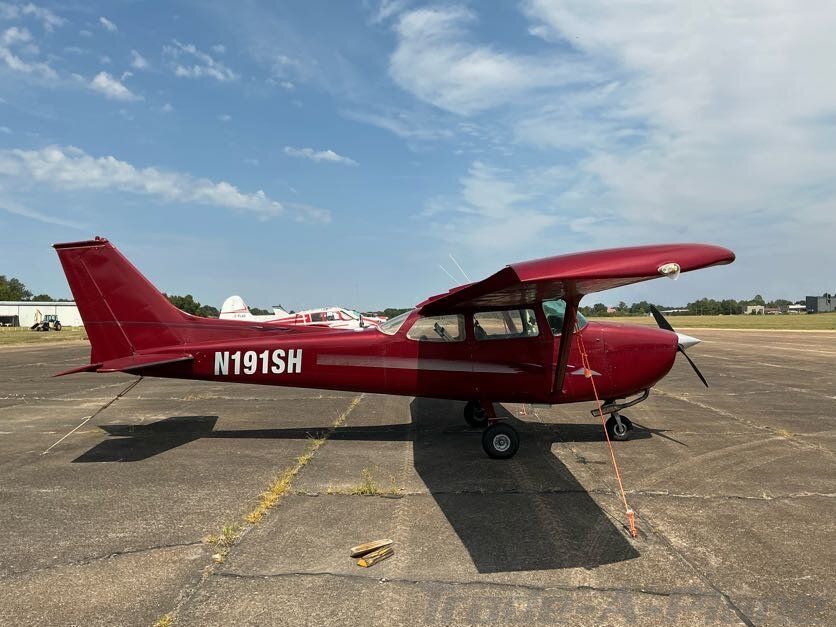 📷 16
 📷 20
 📷 18
Prices, fleet and safety figures update automatically from fyiAero listings, the FAA aircraft registry and NTSB data. The editorial was written by fyiAero with AI assistance from that data and general type knowledge. It is not a substitute for a pre-buy inspection, title search or professional advice.
